
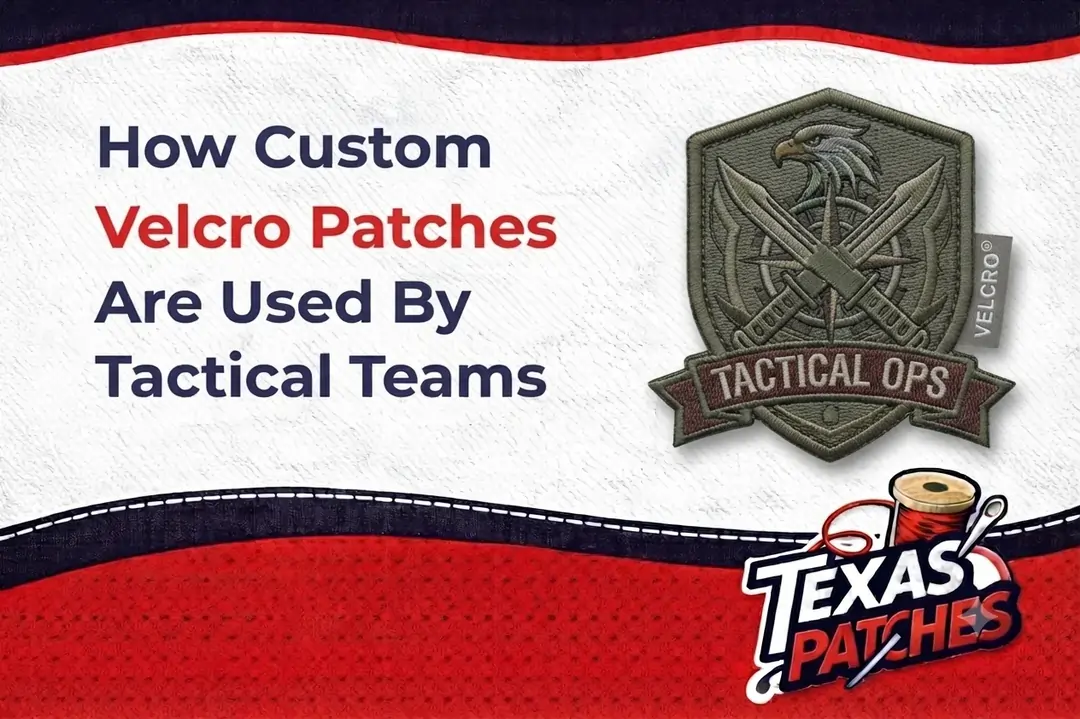
How Custom Velcro Patches Are Used By Tactical Teams
Have you ever seen the logos on military or security uniforms and thought about what they mean? These logos might seem basic, but they’re really important. They tell you who someone is, what their rank is, what their job is, and sometimes what task they’re doing. In this blog, we will study how tactical teams use these patches.
In high-risk situations, being able to identify people fast can make a huge difference. What if you could swap out those logos in a few seconds?
No sewing, no prep time, just stick on or take off when you need to.
That’s why modern tactical teams are fans of Velcro patches.
Why Tactical Teams Prefer Velcro Patches
Tactical teams work in environments where speed and clarity matter. Every part of their gear must be practical and easy to use. That is why Velcro patches have become so popular.
1. Fast Identification during Operations
During missions, teams must quickly recognize each other. In large operations, many units may work together, like police, military units, rescue teams, and security officers might all be present.
Velcro patches for tactical gear help teams solve this problem. These patches can show:
- Team name
- Rank or role
- Blood type
- National flag
- Unit logo
Because the patch attaches with Velcro, it can be replaced in seconds. If the mission changes, the patch can change too.
For example:
| Patch Type | Purpose |
| Name Patch | Shows the officer’s name |
| Rank Patch | Displays rank level |
| Flag Patch | Shows nationality |
| Role Patch | Indicates job (medic, leader, sniper) |
This quick visual system helps everyone stay organized.
2. Flexible Gear Setup
One major advantage of Velcro patches is flexibility. Tactical teams do not always perform the same tasks. One day, they may handle security. Another day, they may assist in rescue operations.
Because of this, uniforms must adapt. With Velcro patches, officers can easily adjust their uniforms without needing new clothing. They simply attach the correct patch for the mission.
Here is a simple comparison:
| Traditional Sewn Patch | Velcro Patch |
| Permanent | Removable |
| Hard to change | Easy to switch |
| Takes time to replace | Takes seconds |
This flexibility saves time and money for organizations.
3. Clear Role Communication
In tactical situations, communication must be fast. Sometimes there is no time to explain who is responsible for what. That is where removable patches become useful.
A patch can clearly show roles like:
- Commander
- Medic
- Explosive expert
- Communications officer
When everyone sees these roles, teamwork gets easier. New members can quickly figure out who to go to in an emergency.
Common Types of Patches Used by Tactical Teams
Not all patches are the same. Tactical teams use different patches for different reasons. Each one sends a clear message. Let’s look at some common ones.
1. Name and Identity Patches
These are the most basic patches. They show the name of the officer or team member.
Why is this important?
Because it builds trust, team members can quickly recognize each other. It also helps during joint missions when multiple units work together.
These patches are usually placed on the chest area of the uniform.
Many teams use Velcro patches because they are easy to change. If a uniform is shared between team members, the name patch can simply be swapped.
2. Rank and Leadership Patches
Every tactical team has a structure. Some members lead while others follow instructions.
Rank patches help show this structure clearly. For example:
| Rank | Responsibility |
| Commander | Leads the mission |
| Sergeant | Manages team members |
| Officer | Carries out tasks |
When things get really tough, the people in the team need to know who is in charge and giving orders. The rank patches on their uniforms make it easy to see who the leaders are. This helps the team make decisions when they are on a mission.
3. Role-Specific Patches
Some people in the team have special jobs that they are good at. For example:
- Medics help people who are hurt
- Snipers shoot from afar
- Communication officers take care of the radios
- Explosive experts handle dangerous devices
- Role patches help identify these specialists quickly
This is where tactical gear customization becomes very helpful. Teams can create patches based on their exact needs.
Here is a quick example:
| Patch | Meaning |
| Medic Patch | First aid expert |
| K9 Patch | Dog handler |
| Sniper Patch | Long-distance shooter |
| Tech Patch | Handles equipment |
When something urgent happens, everyone knows who to call.
Where Tactical Teams Place Their Patches
Patch placement also matters, and the location helps people see the patch quickly.
Most uniforms have special Velcro areas designed for patches. Common patch locations include:
- Chest area
- Shoulder sleeves
- Tactical vests
- Back panels
- Hats or helmets
Each location serves a purpose. For example:
| Location | Purpose |
| Chest | Name and role |
| Shoulder | Flag or unit |
| Back | Team identification |
| Vest | Special mission patches |
Many removable uniform patches are placed on tactical vests. This is because vests are highly visible during operations. When team members move or communicate, others can quickly read the patch.
How Velcro Patches Improve Safety
Safety is one of the biggest reasons tactical teams use patches. In dangerous environments, quick identification can save lives.
Consider a situation where someone is injured. A medic must be found immediately. Instead of asking around, team members can simply look for the medic patch. This speeds up response time.
Velcro patches also allow teams to remove sensitive information if needed. Some missions require anonymity. In those cases, patches can be removed quickly. This makes the system both practical and secure.
Another safety benefit is visibility. Many teams design patches with bold colors or reflective materials. This helps teammates recognize each other even in low light.
How Patches Help Teams Work Better Together
In tactical work, teamwork is everything, and every member has a role. Clear identification makes teamwork smoother.
For example, think of a rescue mission. One team member may handle medical care, another may handle communication, and another may lead the entry team. Instead of asking many questions, officers can simply look at the patches.
They instantly know who is responsible for what. Many teams prefer patches for tactical gear because they support this fast teamwork system. If someone switches roles during a mission, the patch can change too.
Why Velcro Patches Are Becoming Standard Tactical Gear
Modern tactical gear keeps improving. Teams always look for equipment that is fast, simple, and reliable. Velcro patches fit perfectly into this idea.
In the past, many patches were sewn onto uniforms, which made them permanent. If a patch needed to be changed, the uniform had to be stitched again. That took time and effort.
Velcro changed everything.
Now patches can be removed or replaced in seconds. No tools are needed, and no sewing is required. This is why many modern teams now prefer Velcro patches for tactical gear.
Frequently Asked Questions
Are Velcro patches strong enough for field use?
Yes. High-quality Velcro patches are designed for tough environments. They stay attached during training, movement, and operations.
What information do tactical patches usually show?
Most patches show names, ranks, roles, national flags, or unit logos. Some patches also show special skills like medic or sniper.
Can tactical teams design their own patches?
Yes, many teams create custom designs. This allows better gear customization and stronger team identity.
It’s A Wrap
Custom patches may seem like a thing, but they are really important for tactical operations. They help teams figure out who is who, what rank someone is, and what role they have, quickly.
The thing that makes patches more useful is Velcro. Now officers can put them on and take them off in just a few seconds. This makes it easy for teams to change things up for missions without having to change their whole uniform.
Over time, patches have become more than a label. They show that people are working together and all are professionals. As the gear that people use for operations gets better, the patches will get better, too.
In the end, these small custom patches show that even the smallest things can make a difference when things are really critical.

Mike Smith is a content writer who focuses on informative and engaging blogs in the fashion and apparel niche, with a strong emphasis on custom patches. Through the Texas Patches Blog, he shares practical guides on different patch types, production methods, and personalization options. His content is aimed at helping readers understand how patches are made and how they can be used effectively. His work is useful for those planning to purchase patches in bulk or start their own patches business.