
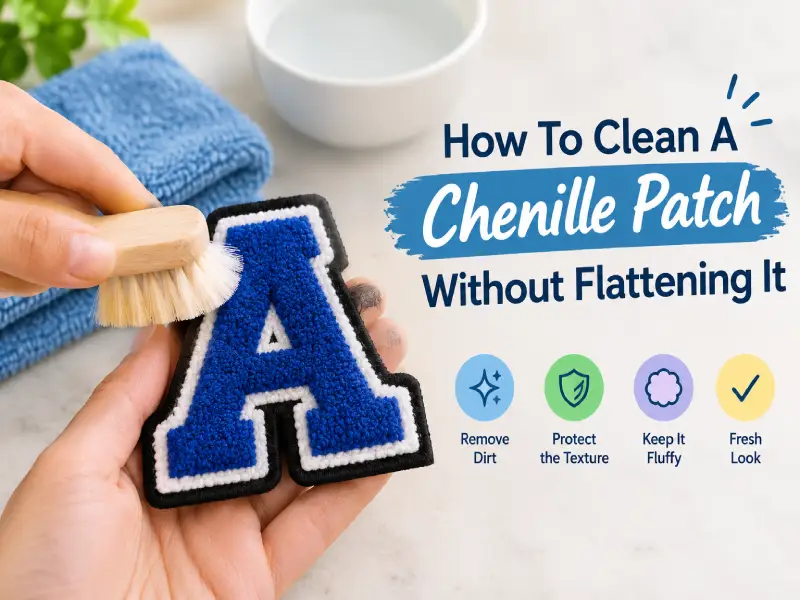
How To Clean A Chenille Patch Without Flattening It
Discover how to clean your chenille patch without ruining its delicate, fluffy feel. Use cleaning and drying techniques that allow you to remove dirt from your patch while preserving its form and details.
Keep The Chenille Patch Looking Fresh Longer
The chenille patch can give a jacket, purse, hat, or another item a unique look. It has a unique texture due to the raised surface of the patch. Yet, at the same time, the patch should be treated carefully if it gets dirty.
The process of cleaning a chenille patch does not involve the application of harsh substances or heavy rubbing of the item to make it look perfect again. Excessive water, pressure, or heat can cause the patch to flatten.
Using a proper approach, the chenille patch can be cleaned without losing its texture and feel. The main thing is to understand what should be used and how to dry the patch properly.
Check The Patch Before Cleaning
Before cleaning the patch, examine the patch carefully. Loosen threads, raised edges, weak stitches, and other potential problems can worsen if the patch is rubbed or soaked.
A quick examination can also show the nature of the dirt that has to be cleaned. Dust can be cleaned easily, while a stain will require a bit more effort.
It is also important to evaluate the underlying fabric. A patch applied to denim may be treated differently than a patch on delicate fabric.
The most cautious method is to use the smallest amount of moisture necessary. If dry cleaning gets rid of the dirt, there is no need for any additional water.
Protect The Raised Chenille Texture
Chenille derives its distinctiveness from raised and soft fibers. Maintaining the upright position of these fibers is very important when cleaning.
This technique is especially crucial for chenille patches in Texas, where they are frequently used in jackets, uniforms, sportswear, among others. The fiber should not be rubbed back and forth but rather should be cleaned in soft motions.
Pressure can cause the pile to lie flat, hence making the patch look worn out despite the integrity of the fibers being intact. The fiber should not be twisted or squeezed when cleaning.
Remove Loose Dust Without Pressure
Small particles and dust can easily be removed without any need for washing the patch. Loose dirt can easily be brushed away by a soft, dry brush from the spaces between the raised fibres.
Move the brush gently in the direction of the chenille patch. Brushing too hard will flatten the fibres of the patch and change its appearance.
The patch may also be cleaned using a soft cloth around the edges without touching the actual patch. Pressing the actual patch during this process will damage its appearance.
This basic cleaning process is a good step to consider before applying any liquids because it eliminates surface dust without damaging the patch surface.
Use A Mild Cleaning Solution
In cases where dry cleaning does not work, a little soap might work better. However, the cleaning solution must be mild and used in small quantities.
The cleaning cloth can then be slightly moistened using the solution before gently pressing it on the stained area. It must not be soaked since excess water will get through to the backing and surrounding fabric and cause the patches to come off.
Rather than rubbing the stained area, the cleaning cloth needs to be moved around it delicately, as this will prevent the patch from being damaged and at the same time remove the dirt easily.
Choose Quality Patches For Easier Care
Selection of high-quality patches can help with easy maintenance and preservation of the patch’s appearance. A Texas patch company offers chenille patches that are finely sewn with good backing and proper quality fiber material.
Good quality construction can help with the easy maintenance of the shape and appearance of the patch during washing. Carefully evaluate sewing, fiber quality, backing, and finishing before purchasing.
A good quality chenille patch will be easier to maintain once it has been cleaned using proper techniques. High-quality materials, together with proper care, ensure that the patch remains soft and clean for longer.
Avoid Harsh Products And Heavy Scrubbing
Even though high-quality cleaners appear helpful in removing marks from patches, they are too harsh on both chenille fibers and patch backing.
Aggressive bleaches, stain removers, and other chemicals can change the color and texture of the patch surface and even weaken the fabric used for stitching the patch. Scrubbing can create another issue, as this pushes the raised fibers flat.
That is why cleaning should start with gentle efforts, and if a stain does not wash out quickly, it is better to clean several times rather than applying heavy detergents.
Remove Stubborn Marks Slowly
Some spots require special treatment, but regular dirt does not necessarily need scrubbing the area with great effort.
The spot can be cleaned using a small amount of mild cleaner and a soft cloth. The cleaner needs to be applied carefully, allowing time for the cleaner to remove the marks easily.
After each attempt, the spot can be evaluated, and if it starts to be cleaned, the same procedure can be continued.
If no change occurs, stop the process rather than putting more effort into removing the dirt. Such effort can lead to the appearance of texture damage that is more difficult to remove than the original spot.
Dry The Patch Without Flattening It
Drying is as essential as cleaning when using Houston patches whose soft, raised texture has to be preserved. After cleaning, any extra moisture should be removed by lightly pressing a dry cloth on the area around the patch, but not directly on the patch itself.
The object should be laid flat or positioned normally in an open place. Drying through air will ensure that the fibers of the patch can dry gradually while preserving its original form and texture.
Hair dryers must never be used, especially if set on high heat. This can have adverse effects on the fibers, backing, or adhesive of the patch.
Restore The Texture After Cleaning
Once the patch dries out completely, it should be examined properly. If the fibres of the patch appear slightly pressed, they can be lifted using a soft brush.
Brushing needs to be gentle, as it intends to loosen the fibers without forcing them into a certain pattern.
The patch must not be rubbed when it is still wet. When wet, the fibers tend to shift positions, stick together, or flatten. An entirely dry area is much simpler to deal with and enables the cleaner to know if more cleaning is required.
Prevent Future Dirt Build-Up
The simplest thing to ensure the safety of the patch is to prevent any buildup of dirt on it. Frequent dusting will help avoid any deep cleaning.
Avoid putting clothes in a damp place. The moisture could develop an unpleasant smell, which might spoil the materials near the patch.
If the object is not in use, it must be stored in such a manner that it does not squash the patch. No heavy things must be placed on it.
Proper handling on a day-to-day basis makes a huge difference. A patch that gets proper handling will not require rough cleaning in the future.
Practical Guidance For Chenille Patch Care
Can chenille patches be washed?
Chenille patches may sometimes be safely cleaned without being subjected to too much pressure. Spot cleaning is always recommended if one needs to clean a patch since it is safer for preserving the raised structure of the patch. This can be achieved through the use of a cloth, mild soap, and minimal moisture.
Why does a chenille patch flatten?
Chenille patches get flattened when exposed to strong pressure, brushing, rubbing, or high temperature. Such actions cause a change in the texture of the raised fibres of the patch.
Can a hairdryer be used to clean chenille patches?
It is not advisable to use a hairdryer when cleaning chenille patches. High heat affects the patch’s raised fibres, the patch itself, its stitching, and the adhesive that holds it in place. Therefore, air drying is the safest way of cleaning a chenille patch.
When Should Chenille Patches Be Cleaned?
Chenille patches should be cleaned when they look dirty. A light layer of dust may be brushed away frequently using a soft brush or a cloth to prevent the need for cleaning and maintain the softness of the material.
What Should Be Avoided When Cleaning Chenille Patches?
When cleaning chenille patches, it is necessary to avoid harsh chemicals, scrubbing, soaking, twisting, squeezing, and exposure to high temperatures. Such actions may spoil the fibres, colour of the patches, their stitching, or destroy their elevated texture.
Conclusion
A chenille patch should not be cleaned with strong cleaning procedures. Applying light dust removal and mild soap if necessary, and avoiding too much water will help preserve the raised fibres.
Appropriate drying is also very important because too much heat and rubbing may cause damage to the patch’s texture, backing, or attachment. Regular maintenance helps avoid dirt buildup and will make cleanup easier in the future.
Checking the patch before cleaning and selecting appropriate tools will help maintain the softness and appearance of the patch.
For patches and garments that require special care, professional cleaning can offer further protection and minimize damage risks.