
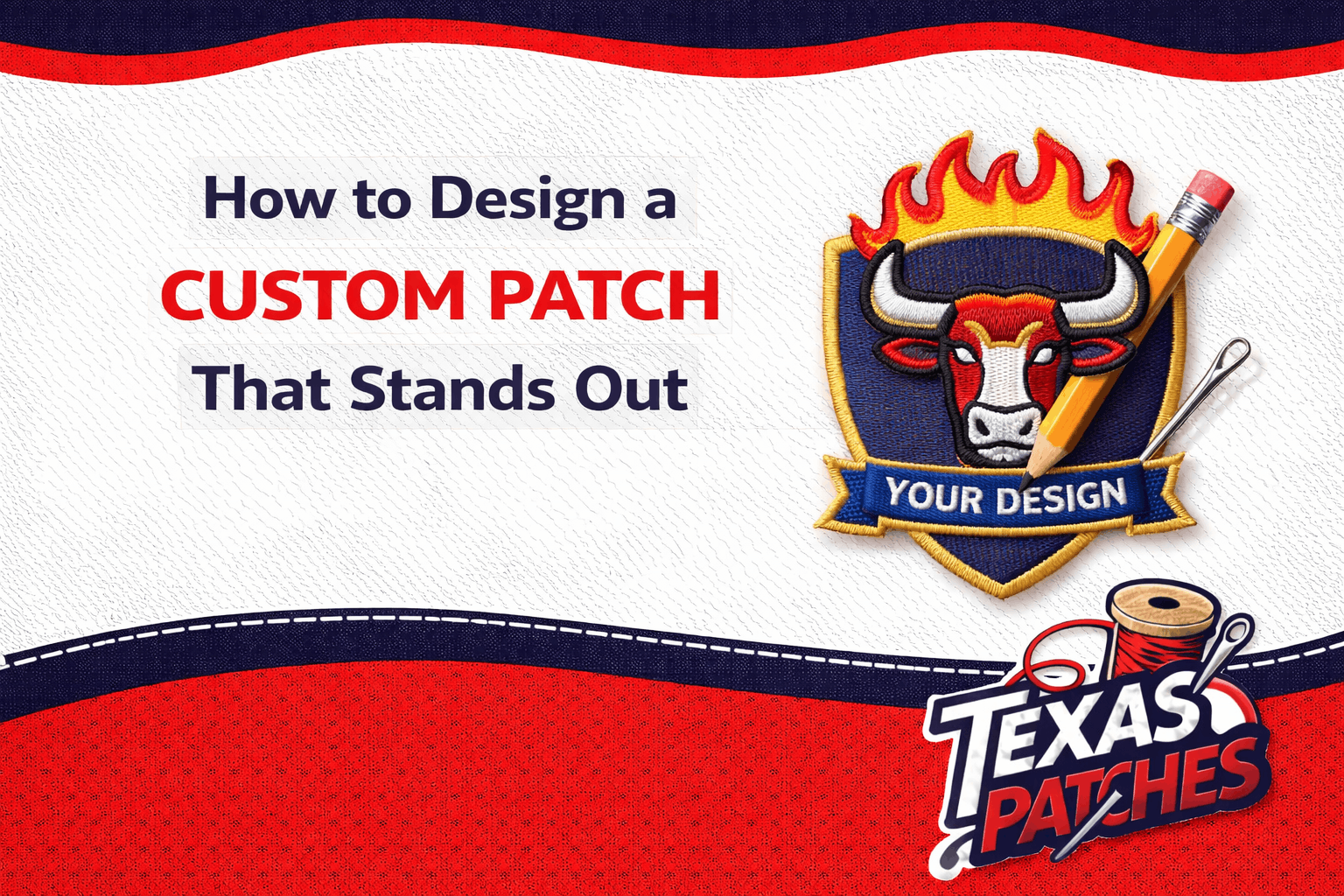
How to Design a Custom Patch That Stands Out
If you are wondering how you can make a statement without being loud about it, then consider inclining towards the efficient and fascinating ability of patches. These small, decorative, yet effective emblems tell stories in a tiny space that no other tool will be able to do. In 2026, every brand, every individual, every team, or you can say a whole lot of institutions, will be sharing the same query in a bracket, which is how to become unique and a mainstay in their respective industries.
With the ultimate revival of patches at the right time, when people needed them most for a personalized touch, they have become everyone’s top priority to become visible to the world.
A patch may instantly convey identity, originality, and personality, whether it is sewn onto a jacket, fastened to a backpack, or proudly worn on a uniform. But it takes more than just putting a logo on fabric to create one that really sparks curiosity among the viewers. It calls for purpose, imagination, and a thorough comprehension of visual narrative.
A good patch strikes a balance between creativity and simplicity. From a distance, it draws attention, but up close, it reveals meaningful intricacies. For this reason, brands and designers are always looking for concepts that are both aesthetically pleasing and meaningful.
How to Determine the Purpose and Audience of Your Patch?
When it comes to the design of a patch, whether it’s a brand, a company, a team, or even a person looking forward to getting one for themselves, needs to understand that the concept must be striking enough to captivate everyone’s attention.
Every iconic design starts with a concept, so before installing any design software, take some time to consider the message your patch should convey. Look for the custom patch design tips that resonate with your theme and are centered around your audience.
Before choosing a final path, designers commonly sketch a number of rough concepts while studying the ideas.
- For example, if you are in a hiking group, you can create a patch that includes mountains, pine trees, or a compass symbol in your initial sketches.
- If the patch is for a streetwear company, you could try using bold text, a distinctive mascot, or geometric motifs that symbolise the character of the brand.
- Going forward, a designer working on a motorbike club patch might begin with a rough sketch of a skull and wings before progressively refining it into a powerful insignia.
- In a similar vein, a coffee business making merchandise patches might start with a basic sketch of a coffee cup and then turn it into a stylised logo.
You can freely play with these early sketches without stressing about precision. At this point, artistic discovery is more important than technical perfection.
Some of the most unique artworks began as little pencil sketches on paper, such as antique travel patches or traditional varsity jacket emblems. You give your design the room to develop into something genuinely remarkable by permitting yourself to experiment with concepts first.
How can You Create Artwork That Turns into Visible Threadwork?
It takes a different approach to design for fabric, especially for the patches, than it does for screens or paper. When it comes to threads, there are restrictions like thin lines, intricate gradients, or tiniest details that might not translate well into embroidery. For this reason, it is significant to learn how to create patch artwork, especially for sewing. In contrast to printed graphics, embroidery creates designs by layering stitches on fabric. This implies that throughout production, incredibly tiny details can vanish. Here, opting for the professionals who are experts in the making of the patch is important for the remarkable final results.
Designers usually simplify artwork before turning it into stitches to prevent this issue and often test by shrinking it to the size of the final patch to ensure that it is still recognizable at that scale. Thickening lines, expanding text, or simplifying complex pictures are some examples of this approach. The objective is to maintain the essential elements of the design while making sure it is still readable and aesthetically pleasing.
What Constituents Decide the Final Look of a Patch?
Shape
After determining the design of your patch, the other important element is the shape. Each design works differently in various shapes, and deciding on one that reflects your motto perfectly is significant. Custom shapes can significantly boost visual impact, even though many patches have conventional circular or rectangular shapes. A patch in the shape of a shield, a mountain, or the profile of a mascot seems instantly more unique. When looking for ideas, think about how the design’s narrative might be strengthened by the exterior shape. It should support the design and building, and the balance between these two aspects offers a more enhanced final piece.
Color
The next thing that drives the perception of a patch and how it is influenced is by its colour. Muted tones communicate sophistication and legacy, while vibrant colour combinations generate energy and draw attention. Like, neon colours feel powerful and contemporary, whereas navy and gold can imply tradition. Limiting the quantity of colours used in a patch is one of the most useful strategies. A design with too many colours may appear cluttered and cost more to produce. Three to five colours that contrast well and retain clarity even in small formats are used in the majority of the patches.
Typography
Texts are not mandatory or a permanent element of a striking patch, but when used properly, they can be a potent design element. Names, slogans, or dates are usually incorporated into patches to give the design additional significance, and need to make sure that it is readable and visible even at small sizes.
The best patch design ideas by the designers usually select bold, straightforward typefaces that are easy to embroider. Extremely tiny lettering or script typefaces may appear stunning on a computer, but they become challenging to stitch. Letter spacing is just as important, and with careful consideration, an exceptional patch could be created.
FAQs
How can we make a custom patch design unique?
One of the greatest patch design ideas is to combine symbols, colours, and typography that convey a certain concept or identity, and storytelling makes a simple patch design into an exceptional one.
Is it possible to make use of personalised patches for marketing or branding?
Indeed, a lot of companies employ patches on brand partnerships, promotional items, and uniforms. A simple logo can be transformed into a distinctive piece of branded clothing with the help of creative patch design ideas.
How much time does it take to transform artwork into a completed patch?
The time for patches production process usually takes one to three weeks once the patch artwork creation is finalised, and it also depends on the complexity of the design and the patches quantity purchased.
What is the most common mistake that individuals make when creating patches?
Adding too many little details is one of the most common mistakes. This problem can be avoided by following useful advice, such as using bold lines and simplifying artwork.
Make a Patch That People Remember
Custom Patch Manufacturing is both an artistic and technical process, and each step is important to bring a polished and fine visual display of your idea. As a buyer, you also need to understand the process and figure out the threadwork, shape, color, and typography that work in the making of a patch. Once you realize how these aspects work, you will see how a small patch can become something that people will proudly wear.

Mike Smith is a content writer who focuses on informative and engaging blogs in the fashion and apparel niche, with a strong emphasis on custom patches. Through the Texas Patches Blog, he shares practical guides on different patch types, production methods, and personalization options. His content is aimed at helping readers understand how patches are made and how they can be used effectively. His work is useful for those planning to purchase patches in bulk or start their own patches business.